Factors That Increase Basement Remodeling Costs: Scope Creep and Upgrades Explained
You priced out a basement finish, got a number you could live with, and now the quotes keep climbing. That is normal, and it has a cause. The factors that increase basement remodeling costs are rarely a mystery once you see them laid out. Most of the time, the budget grows for one of two reasons: scope creep, where the project quietly expands, or upgrades, where "while we're at it" decisions stack up. Understanding basement remodel scope creep is essential to keeping costs predictable. This guide breaks down both for Minneapolis homes, so you know where the money goes before you commit, whether you are finishing a basement to live in or to sell.
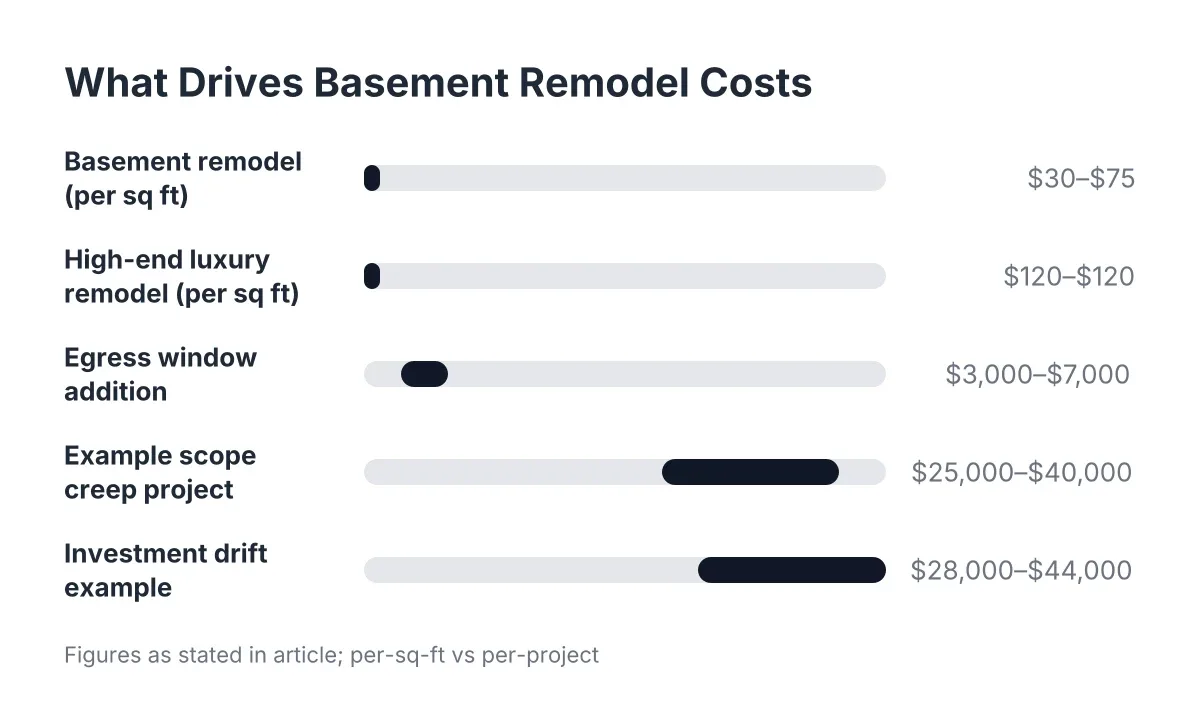
If you are running the numbers as an investment, this matters even more. A basement finish that drifts from $28,000 to $44,000 did not get 57 percent better at resale. It just got more expensive. The goal here is to show you exactly which decisions move the price, which ones move the value, and which ones only move your wallet.
Why Basement Budgets Blow Up More Than Other Remodels
Basements have a trait that kitchens and bathrooms do not: almost nothing exists yet. A kitchen remodel starts with plumbing, wiring, walls, and a floor already in place. An unfinished Minneapolis basement starts with bare concrete, exposed joists, and a few utilities bolted to the wall. Every single system has to be added, and every system is a decision point where the price can go up.
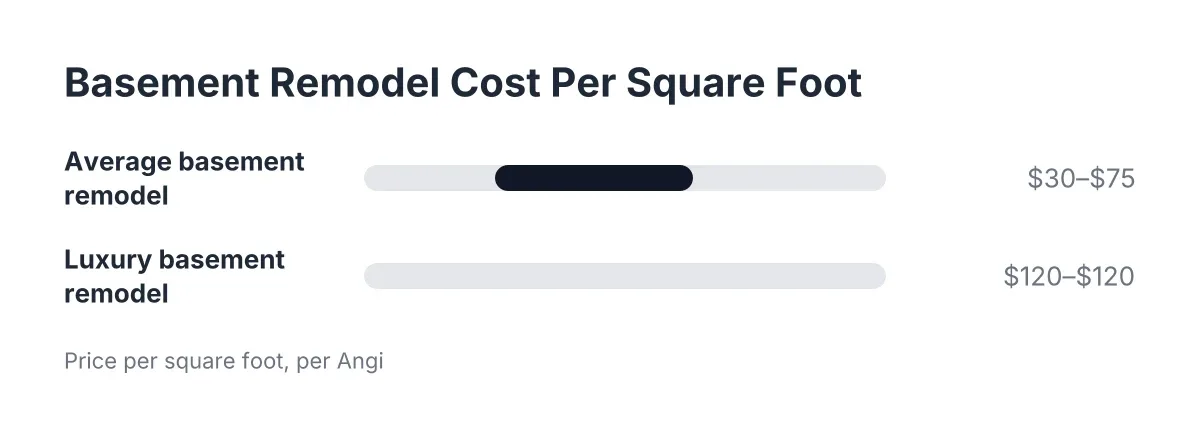
That blank-slate quality is why online cost figures swing so wildly. According to Angi, an average basement remodel runs between $30 and $75 per square foot, and high-end luxury remodels can pass $120 per square foot. That is not a typo. The same square footage can cost four times as much depending on what goes into it. The spread between those numbers is exactly what this article is about.
In addition, Minneapolis basements bring local conditions that push costs in specific directions. Cold climate means insulation and heating decisions you cannot skip. Older housing stock often means low ceilings, cast-iron plumbing stacks, and moisture histories that have to be dealt with before drywall goes up. None of that shows up in a national average.
The Factors That Increase Basement Remodeling Costs the Most
The biggest cost drivers in a basement remodel are wet rooms, egress work, ceiling height problems, moisture correction, and tear-out of previous finishing attempts. Each of these can add thousands on its own. Everything else, flooring upgrades, trim, lighting counts, moves the number in smaller steps. Knowing which bucket a decision falls into is the core budgeting skill.
Here is the short list, roughly in order of impact:
- Adding a bathroom. Plumbing below grade often means breaking concrete, running drain lines, and sometimes adding a sewage ejector pit. This is routinely the single largest line item after the base finish itself.
- Creating a legal bedroom. A conforming bedroom needs an egress window, and according to HomeGuide data, adding an egress window to a basement costs $3,000 to $7,000 on average. That includes cutting the foundation, the window well, and the window itself.
- Fixing moisture before finishing. Drain tile, sump work, and wall sealing come before any framing. Skipping this step is how finished basements get ruined, so it is not really optional in a house with a wet history.
- Demolition of old finishing. When a basement already has framed walls with insulation stuffed against the concrete, the smart move is usually tearing it out and starting clean rather than building on a questionable assembly. That adds demo labor and disposal costs.
- Mechanical relocation. Moving a furnace, water heater, or ductwork to open up the layout is expensive and often not worth it. Designing around the mechanicals is almost always cheaper.
Notice what is not on the list: paint colors, carpet grade, and light fixtures. Those matter, but they move the budget by hundreds, not thousands. The factors that increase basement remodeling budgets by five figures are structural, mechanical, and wet.
How Basement Remodel Scope Creep Transforms Project Costs
Scope creep is the slow expansion of a project after the budget is set. It rarely happens in one big decision. It happens in six small ones, each reasonable on its own, that together turn a $25,000 finish into a $40,000 remodel.
Suppose a homeowner in Minneapolis plans a straightforward family room finish: framed walls, drywall, flooring, and lighting across 700 square feet. During planning, the conversation shifts. Since the plumber is coming anyway, why not rough in a bathroom? Since a wall is going up there, why not frame a bedroom? The bedroom needs an egress window, so add $3,000 to $7,000 per HomeGuide's figures. The bathroom rough-in becomes a full bathroom because a rough-in alone feels unfinished. In that scenario, where basement remodel scope creep has taken hold, the project has roughly doubled, and nobody made a single bad decision along the way.
For a flipper or rental investor, scope creep is especially dangerous because each addition feels justified by resale logic. A bedroom adds value. A bathroom adds value. Both of those statements are true, but the National Association of Realtors Remodeling Impact Report found that 64 percent of basement finishing costs are recovered at sale. That is one of the better returns among the 20 projects studied, but it still means every added dollar returns about 64 cents on average. Additions have to earn their place, not just sound good.
How to Stop Scope Creep Before It Starts
Decide the finished square footage, the room list, and the wet-room count before you get quotes, and put it in writing. When a new idea comes up mid-project, price it as its own project with its own return math, not as a small add-on. A bathroom is never a small add-on.
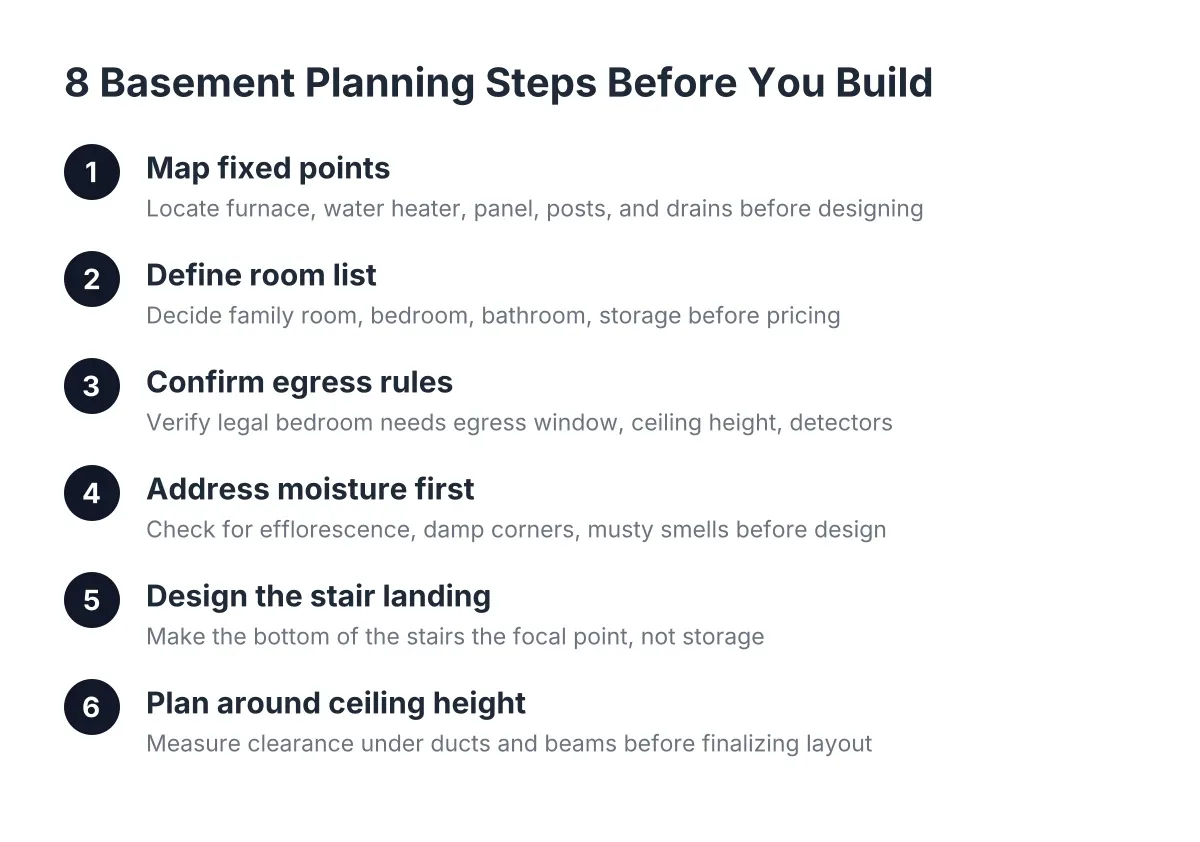
One layout mistake worth flagging: a common inefficient plan finishes only the space to one side of the stairs and leaves the landing area as rough storage. That wastes the most visible square footage in the basement, the first thing anyone sees coming down. If budget forces you to phase the project, finish the entry area first and leave the far corner rough, not the other way around.
Upgrades: Where "While We're at It" Gets Expensive
Upgrades are different from scope creep. The project footprint stays the same, but every material and finish choice steps up a tier. Luxury vinyl plank becomes engineered hardwood. A drywall ceiling becomes a coffered detail. Standard trim becomes wide casing with paneling. Individually, each upgrade might add $1,500 to $4,000. Stack five of them and you have added a bathroom's worth of cost without adding a bathroom.
Trim is the sneakiest one. Homeowners consistently underestimate how much baseboard, casing, and paneling a finished basement needs. A basement has more wall corners, bulkheads, and transitions than a typical upstairs room, so trim labor and material run longer than people expect. If a quote seems high on finish carpentry, that is often why, not padding.
However, some upgrades punch above their cost. Carrying a consistent design element, like matching paint on cabinets and walls or paneling that continues up the staircase, reads as higher-end for modest money. The staircase trick works because the design previews itself before anyone reaches the bottom step. These are the upgrades a resale-focused owner should consider, because they change how the whole space feels rather than one surface.
Smart Places to Save Without Looking Cheap
Not every surface deserves top-tier material, and buyers cannot tell the difference on several of them. A few proven ways to hold the line:
- Cheap basement ceiling ideas that actually work: painted exposed joists in a dark color, or a simple drywall ceiling where ductwork allows. Both cost less than a drop ceiling grid with premium tiles and look cleaner in photos.
- Inexpensive basement wall ideas: standard drywall with good paint beats specialty wall systems on cost, and a single accent wall of budget-friendly slat or shiplap paneling adds the "designed" look without paneling the whole room.
- Flooring: mid-grade luxury vinyl plank handles basement moisture conditions well and reads as hardwood to most buyers. Spending triple on real wood below grade is risky money in a Minneapolis basement.
- Small basement ideas with bar appeal: a dry bar, meaning cabinets and a counter with no plumbing, delivers most of the entertaining value of a wet bar at a fraction of the cost. The sink is what triggers the plumbing bill.
The pattern across all four: spend on layout and the few details people touch and see up close, and save on the big flat surfaces.
Which Factors Increase Basement Remodeling Value, Not Just Price
The upgrades that reliably move appraisal and buyer interest are conforming bedrooms, full bathrooms, and clean, open layout. Everything else, bars, theaters, custom built-ins, is taste. Taste can help a listing photo, but it does not change how an appraiser counts rooms, and it rarely returns its cost dollar for dollar.
The return data backs up a cautious approach. The 2017 Remodeling Cost vs. Value Report estimated a 70 percent national return on basement remodels, but the spread by region was wide, from 86.4 percent in the Pacific region down to 52.8 percent in New England, according to Remodeling Magazine. Zonda's Journal of Light Construction data shows an even wider range, with resale returns running from 23 percent in some markets to 86 percent in others. Your return depends heavily on your neighborhood, your home's price tier, and what comparable finished basements have sold for nearby.
Therefore, the flipper's test for any upgrade is simple: does this change the listing description? "3 bed, 2 bath with finished basement" beats "2 bed, 1 bath with finished basement" by a real dollar amount in most Minneapolis starter neighborhoods. A wet bar does not change the listing description. A home theater does not change it either. For a rental, the test is monthly rent: a legal basement bedroom changes the rent; a custom layout usually does not.
Is a basement bathroom worth it? Often yes, but only when the house is short on bathrooms to begin with. Going from one bathroom to two changes how a house shows and appraises. Going from two and a half to three and a half usually does not cover the below-grade plumbing cost. Run that math before the concrete saw shows up.
Hidden Cost Drivers Specific to Minneapolis Basements
Local conditions add their own line items that national cost articles never mention. In the Twin Cities, three stand out in 2026: moisture correction, insulation requirements for a cold climate, and permit-driven inspection sequencing.
Moisture comes first because it gates everything else. A basement that takes on water in spring snowmelt needs drainage and sealing work before framing, and that work belongs in the budget from day one, not as a surprise. Finishing over a known moisture problem is the most expensive mistake on this list, because it means paying for the finish twice.
Permits and inspections add time more than money, but they shape the schedule. A typical basement finish gets inspected in stages, with an electrical rough-in inspection early and an insulation inspection before drywall. Plan the project around those checkpoints rather than fighting them. In addition, licensed electrical and HVAC work is one place not to economize; those trades carry licensing requirements for a reason, and failed inspections cost more than doing it right once. This is also where a conversation with a professional pays off, because every house's panel capacity, ductwork, and moisture history is different, and no article can audit yours.
One more 2026-specific note on timing: when material prices are climbing sharply, waiting a season for them to settle can beat starting mid-spike. A basement is an optional project in a way a leaking roof is not. Use that flexibility.
Building a Budget That Survives Contact With Reality
Start with the base finish, then price additions as separate decisions with separate return math. A workable structure for a first-time finisher or a flipper looks like this: set the total basement remodeling cost you can absorb, subtract 10 to 15 percent as a contingency for surprises behind the walls, and spend what remains on a written scope. If the scope does not fit, cut rooms, not quality in the rooms you keep.
Phasing is the honest answer for a lot of budgets in the $15,000 to $40,000 range. Frame, wire, insulate, drywall, and floor the main space now. Rough in the bathroom plumbing while the floor is open, then finish the bathroom in a year or two when cash allows. Roughing in costs a fraction of the full bathroom and preserves the option without blowing the current budget.
A few rules that keep the number honest:
- Get the full scope in writing before comparing quotes, so every contractor prices the same project.
- Treat any mid-project addition over $1,000 as a new decision requiring a night's sleep, not a hallway yes.
- Price the bathroom and the egress bedroom as standalone investments with their own resale case.
- Hold a contingency and do not spend it on upgrades; it exists for what the demo reveals.
- Ask for an itemized estimate, because a single lump number hides exactly the factors that increase basement remodeling bills later.
The trade-off worth naming: a strictly budget-controlled finish will not photograph like a magazine basement, and if your resale strategy depends on a wow factor, a partial or bare-bones finish may return less than you hope. Returns on basement finishing reward either disciplined, modest projects or fully committed high-end ones; the awkward middle, where you overspend on some surfaces and underspend on others, tends to return the least.
The Bottom Line for Minneapolis Homeowners
Basement budgets do not blow up randomly. They grow through added rooms, added plumbing, stepped-up finishes, and site conditions nobody checked before quoting. Control the scope in writing, test every upgrade against the listing description or the rent, deal with moisture before drywall, and phase the wet rooms if cash is tight. Do those four things and the number you start with has a real chance of being the number you end with.
If you need basement finishing, Minneapolis Basement Finishing Pros can help.
Prefer to talk it through? Call (651) 758-8806 — a quick call is usually the fastest way to get a straight answer for your situation.