Basement Remodeling Near Me: How to Vet Local Minneapolis Contractors Step by Step
If you've been searching for basement remodeling near me and your basement has ever smelled musty after a wet spring, you already know the hard part. It's not finding a contractor. It's finding one who will tell you the truth about moisture before selling you anything. When you're vetting a basement remodeling contractor, that honesty about moisture becomes your filter. Minneapolis basements sit in clay soil, freeze-thaw cycles, and spring snowmelt. Some are ready to finish today. Some need water fixed first. This guide walks you through how to evaluate local contractors step by step, so you end up with a finished basement that stays dry, not a remodel that hides a problem under new drywall.
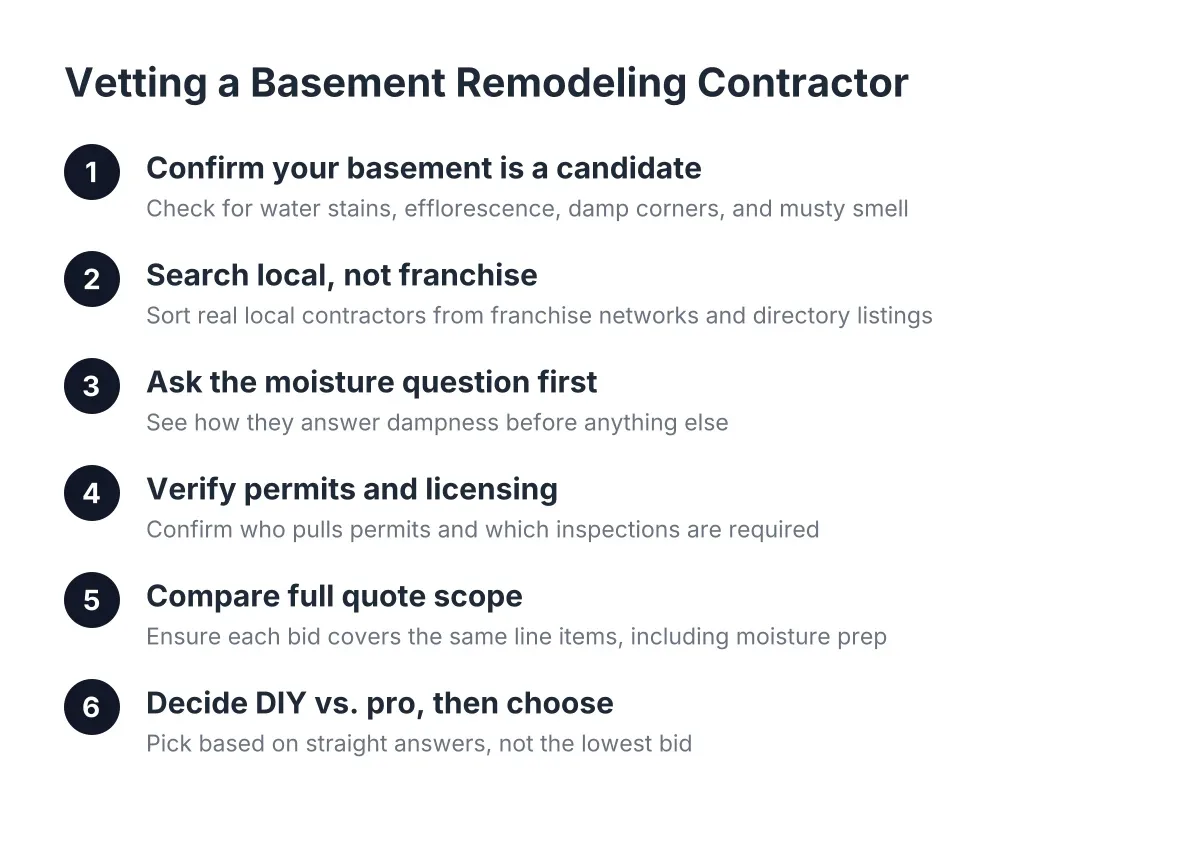
Step 1: Confirm Your Basement Is a Candidate Before Calling Anyone
Start in your own basement, not on a contractor's website. Walk the perimeter after a heavy rain and look for water stains, white chalky deposits on the block (that's efflorescence), damp corners, and musty smell near the floor. Pull back a corner of any old carpet. If you find dark staining or mold on the pad, write down where.
This matters because moisture history changes the entire project. A basement that takes on water once a year is not disqualified from basement finishing, but the water problem has to be solved first, not covered. Grading, gutters, and downspout extensions fix a surprising share of "wet basement" cases. Others need interior drainage or a sump system. The point of this step is simple: know what you're asking contractors to look at, so you can tell who actually looks.
Make a short list before you call:
- Where and when water or dampness appears (season, rain event, location)
- Any past flooding, even minor
- Ceiling height and location of mechanicals (furnace, water heater, main drain)
- What you want the space to become (family room, basement bathroom, rental unit)
Step 2: Search for Basement Remodeling Near Me and Sort Local From Franchise
When you type basement remodeling near me into Google, you'll get three kinds of results: national franchise networks, thin directory listings, and actual local contractors. They are not the same thing, and the difference matters in Minneapolis.
Franchise networks route your call to whoever is on rotation and often push a standardized wall-panel product whether your basement needs it or not. Directory sites list names with no real information behind them. A local contractor who works Minneapolis basements every week knows what a 1950s block foundation does in April, how the city handles permits, and which flooring survives a concrete slab in a cold climate.
To sort them fast, check three things on each website. Does it name the city and talk about local conditions, or could the page describe any basement in America? Does it explain the process, including moisture and permits, before asking for your phone number? Additionally, does it offer a free estimate without pressure tactics like "this price expires today"? Keep the two or three that pass.
Step 3: Vetting a Basement Remodeling Contractor Starts With the Moisture Question
Lead with the question most homeowners save for last: "My basement gets damp in spring. Will you finish it anyway, and what happens to the water?" The answer tells you almost everything.
A good contractor will want to see the basement before answering. They'll talk about finding the source, whether that's grading, drainage, or a crack, and they'll tell you plainly if a separate waterproofing step comes first. Some handle moisture control in-house; others coordinate with a waterproofing company before finishing work starts. Either model works. What doesn't work is a contractor who shrugs and says the vapor barrier will handle it.
Be skeptical in both directions. The contractor who ignores moisture is a risk, but so is the one who quotes a full interior drain tile system over the phone without seeing your basement. If every conversation opens with a sump pump pitch before anyone has stepped foot in your house, keep looking. A basement with managed moisture can absolutely be finished; a basement with ignored moisture will grow mold behind the drywall by year two.
Step 4: Verify Permits, Licensing, and Code Knowledge
Finished basements in Minneapolis require permits, and the inspections exist to protect you. When vetting a basement remodeling contractor, ask directly: "Who pulls the permit, and what inspections will this project have?" A contractor who pulls permits under their own license is accountable for the work. One who asks you to pull the permit as a homeowner is shifting liability onto you.
Expect multiple inspection points on a typical finish. Electrical rough-in gets inspected before walls close up, and insulation gets inspected separately after that. Bedrooms in a basement also need a code-compliant egress window, which is its own planning item in older Minneapolis homes. In addition, electrical and HVAC work should go to licensed trades even on projects where other work is more flexible; those are not corners to cut in a below-grade space.
If you're a landlord finishing a duplex basement, this step carries extra weight. An unpermitted basement bedroom can surface during a city rental inspection or tenant turnover, and fixing it after the fact costs more than doing it right. Durable, code-compliant, and documented beats fast and cheap on a rental every time.
Step 5: Compare What Each Basement Remodeling Quote Actually Includes
A fair quote for a basement remodel spells out scope line by line. When you compare local basement remodeling contractors near you, make sure each bid covers the same work, or the cheapest number is meaningless.
A complete basement finishing quote should address:
- Moisture prep: any sealing, drainage coordination, or vapor barrier work at the slab and walls
- Framing and insulation that meets Minnesota's basement wall requirements
- Electrical, including the rough-in inspection
- Drywall, taping, and paint
- Basement flooring suited to concrete and cold (luxury vinyl plank is a common pick here)
- Trim: baseboard, casing, and door hardware, which homeowners routinely underestimate in a basement
- Basement bathroom rough-in or build-out, if planned
- Permit fees and who pulls them
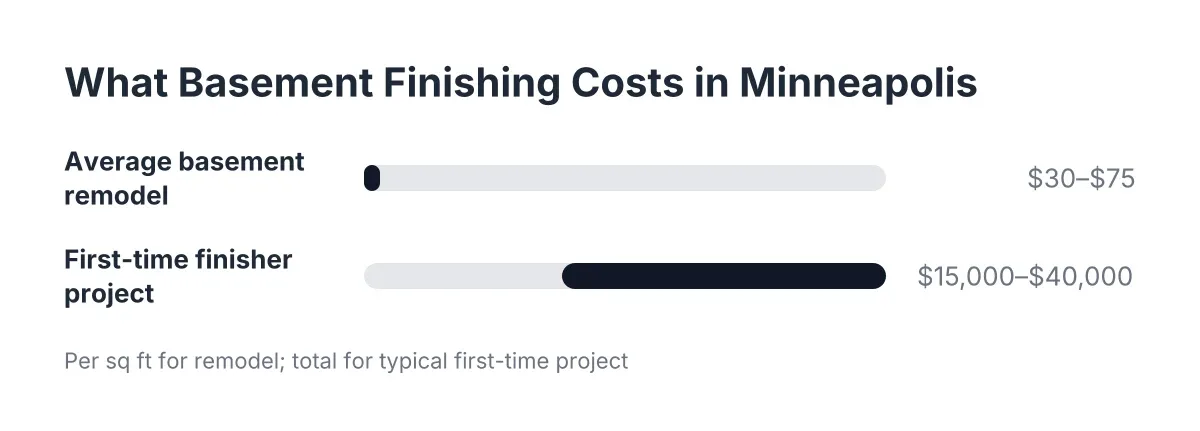
On cost, national figures give you a sanity check, not a promise. According to Angi, an average basement remodel runs $30 to $75 per square foot, with high-end projects exceeding $120. Where your project lands depends on bathroom plumbing, egress work, moisture prep, and finish level. Any contractor quoting a firm price without measuring your basement is guessing.
How Long Does a Basement Remodel Take?
A typical full basement finish takes roughly six to twelve weeks of active work once permits are in hand, as a general planning range. Moisture repairs, egress window cuts, or a basement bathroom add time. Permit review adds lead time before work starts, so ask each contractor to separate "calendar time" from "crew time" in their answer.
Step 6: Decide What You'll DIY and What Goes to the Pros
Basements are forgiving places for homeowner labor on cosmetic work, because nobody scrutinizes a slightly imperfect miter joint in a rec room. Painting, some trim work, and demo of old finishes are reasonable DIY territory if you want to trim the budget.
However, three things should always go to licensed pros: electrical, HVAC, and anything touching moisture or structure. Wiring a below-grade space has its own code rules; for example, running standard Romex cable inside conduit is against code in damp or wet locations, according to the National Electrical Code. That is exactly the kind of detail a weekend DIYer misses and an inspector catches. If you've found active mold, standing water, or a bowing foundation wall, stop and call a professional before any finishing plan moves forward.
Step 7: Make the Call Based on Straight Answers, Not the Lowest Bid
Suppose a homeowner in Minneapolis gets three bids for the same 800-square-foot basement. The first contractor quotes the lowest number but never mentions the spring dampness the homeowner pointed out. The second quotes a five-figure drainage system in the first phone call, sight unseen. Furthermore, the third walks the basement, traces the dampness to a downspout dumping at the foundation, prices the fix separately, and writes a line-item bid for the finish. In that scenario, the third bid is the one to trust, even if it isn't the cheapest.
This is also where the payoff becomes real. Homeowners gave basement finishing a joy score of 9.5 out of 10 in the NAR Remodeling Impact Report, according to the National Association of Realtors, and the same report found 64% of costs recovered at resale. The honest trade-off: pure resale return varies by market, so finish a basement because you'll use the space, not as an investment play. For a landlord, the math is different; a finished lower level that adds a legal bedroom or family room can raise rent and keep good tenants longer.
Once you've picked the contractor who gave you straight answers on moisture, permits, and scope, get the agreement in writing with payment tied to milestones. Then let the inspections do their job.
Ready for a Straight Answer on Your Basement?
If you're in Minneapolis or the surrounding area and you've been putting off the basement because of a musty smell or an old water stain, the first step costs nothing. A free estimate from a local contractor who looks at the moisture before the finishes will tell you whether your basement is ready now or needs water handled first. Either way, you'll have a real answer instead of a sales pitch, and a clear path from unfinished concrete to a dry, livable finished basement.
If you need basement finishing, Minneapolis Basement Finishing Pros can help.
Prefer to talk it through? Call (651) 758-8806 — a quick call is usually the fastest way to get a straight answer for your situation.