Basement Moisture Control Terms Explained: A Plain-English Glossary
If you are getting quotes for basement work in Minneapolis, the paperwork can read like a foreign language. This basement moisture control glossary translates the terms contractors, inspectors, and product labels throw at you into plain English. Use it to read a quote line by line, ask better questions, and spot the difference between a real fix and a coat of paint. Every entry here stands on its own, so skim to the word that stumped you.
- Hydrostatic Pressure: water pushing on your foundation
- Vapor Barrier: plastic sheet that blocks moisture
- Efflorescence: white powder on basement walls
- Condensation: damp air turning into water droplets
- Relative Humidity: how much moisture the air holds
- Sump Pump: pump that sends water outside
- Sump Pit (Basin): the hole the pump sits in
- Interior Drain Tile: hidden drain around the floor edge
- French Drain: gravel trench that moves water away
- Dehumidifier: machine that dries basement air
- Waterproofing Membrane: thick barrier applied to walls
- Waterproofing Paint (Sealer): surface coating, limited fix
- Vapor Drive: moisture moving through concrete
- Grading: the slope of soil around your house
- Downspout Extension: pipe that carries roof water away
- Moisture Test: simple check before flooring goes in
- Scope of Work: the written list of what you are buying
- Free Estimate: a no-cost look at your project
How Water Gets In
These are the terms that explain why your basement is damp in the first place. Understanding them is the foundation of basement moisture control and the glossary of terms every property owner should know, because every product and repair on the market is answering one of these problems.
Hydrostatic Pressure and Basement Moisture Control
Hydrostatic pressure is the force of water in the soil pushing against your foundation walls and floor. After heavy rain or spring snowmelt, that pressure builds and forces water through cracks, joints, and even solid concrete. It matters because pressure from outside cannot be stopped by paint on the inside. If a contractor mentions hydrostatic pressure, they are usually explaining why a drainage fix costs more than a surface fix.
Efflorescence
Efflorescence is the white, chalky powder you see on concrete or block walls after water passes through and leaves minerals behind. It is not mold and it is not dangerous by itself. It is a warning sign that moisture is moving through your foundation, even if the wall feels dry when you touch it. A contractor who spots efflorescence before finishing your basement is doing you a favor; covering it with drywall does not make it go away.
Condensation
Condensation is water that forms when warm, humid air touches a cool surface, like a cold glass on a summer day. In basements, it shows up on cold concrete walls, water pipes, and windows. It matters because condensation looks like a leak but has a different fix, usually a dehumidifier or insulation rather than drainage. Fixing the wrong problem wastes money, so ask which one you have.
Relative Humidity
Relative humidity is a measure of how much moisture the air is holding compared to the most it could hold at that temperature. Basements in Minneapolis run humid in summer, and sustained high humidity feeds mold, musty smells, and warped flooring. Many pros aim to keep finished basements below about 50 percent humidity. A cheap humidity gauge tells you where you stand before anyone quotes you anything.
Vapor Drive
Vapor drive is the slow movement of water vapor through concrete from the damp soil outside to the drier air inside. Your floor slab can pass moisture upward even when it looks bone dry. This matters most when you are picking basement flooring, because vapor coming up through the slab can ruin glued-down or wood floors. It is a big reason contractors test a slab before installing anything over it.
Equipment and Fixes: Basement Moisture Control Glossary
These are the tools and products that show up as line items on a quote.
Sump Pump
A sump pump is an electric pump that sits in a pit in your basement floor and pushes collected water out and away from the house. It is the workhorse of most wet-basement systems. If a quote includes a sump pump, ask where the water discharges and whether a battery backup is included, since Minneapolis storms and power outages tend to arrive together. A pump without a plan for where the water goes is only half a fix.
Sump Pit (Basin)
A sump pit is the lined hole in the basement floor where groundwater collects before the pump sends it outside. Drain lines under the floor feed into it. The pit's size and lid matter more than most homeowners expect; a sealed lid keeps humidity and radon-carrying soil air out of your finished space. If you are planning a finished basement, ask how the pit will be covered and accessed.
Interior Drain Tile
Interior drain tile is a perforated pipe installed in a trench along the inside edge of the basement floor, under the concrete, that catches water and routes it to the sump pit. It is one of the most common permanent fixes for chronic seepage. It matters because it handles water at the floor-wall joint, where most leaks show up. Installing it means breaking out a strip of concrete, so expect dust, noise, and a bigger price than surface treatments. See what that work tends to run in our basement moisture control cost guide.
French Drain
A French drain is a gravel-filled trench with a perforated pipe that collects water and carries it away by gravity. Outside, it redirects surface and soil water before it reaches your foundation. People use the term loosely, sometimes to mean interior drain tile too, so ask the contractor to point to exactly where theirs would go. The location changes the digging, the disruption, and the cost.
Dehumidifier
A dehumidifier is a machine that pulls water vapor out of the air and collects it or drains it away. In a basement, it controls dampness and musty smells that drainage systems do not touch, since those handle liquid water, not humid air. For a finished basement in Minneapolis, a dehumidifier is usually part of the plan, not a substitute for fixing leaks. If a quote leans on a dehumidifier alone to solve visible water, push back.
Waterproofing Membrane
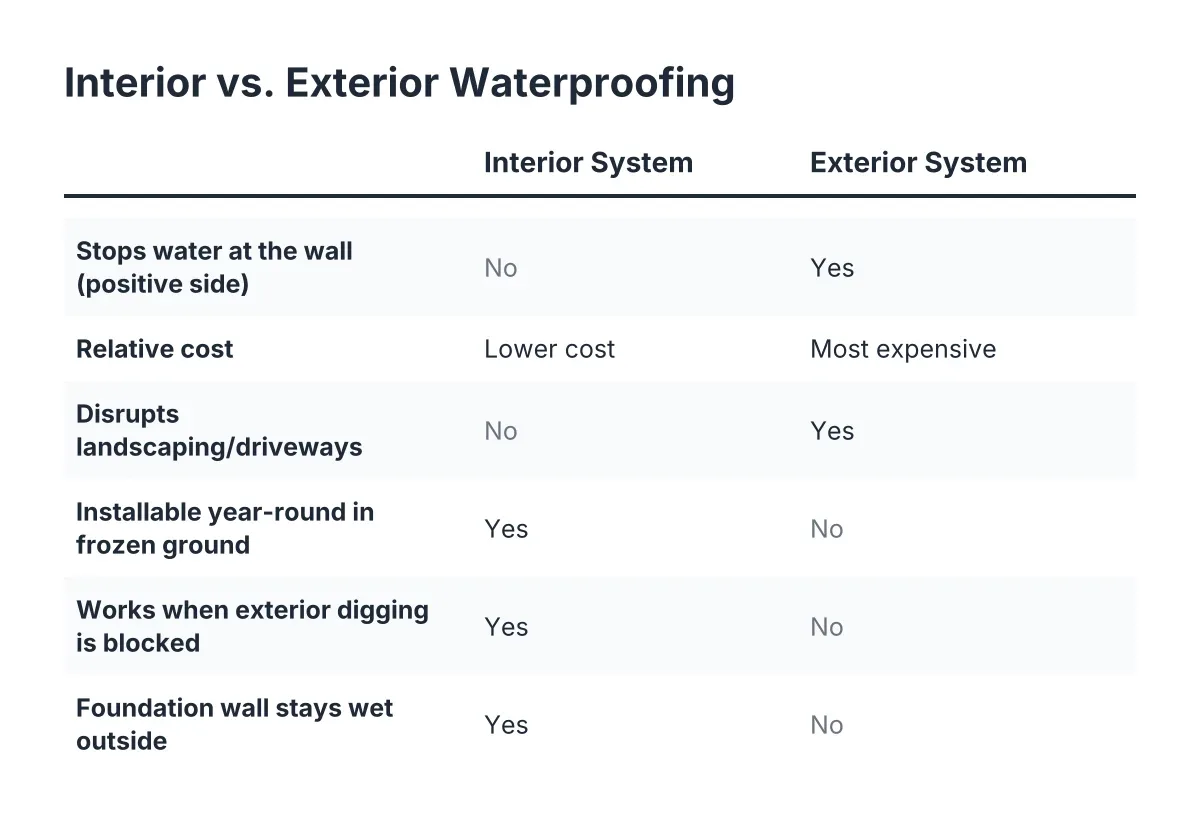
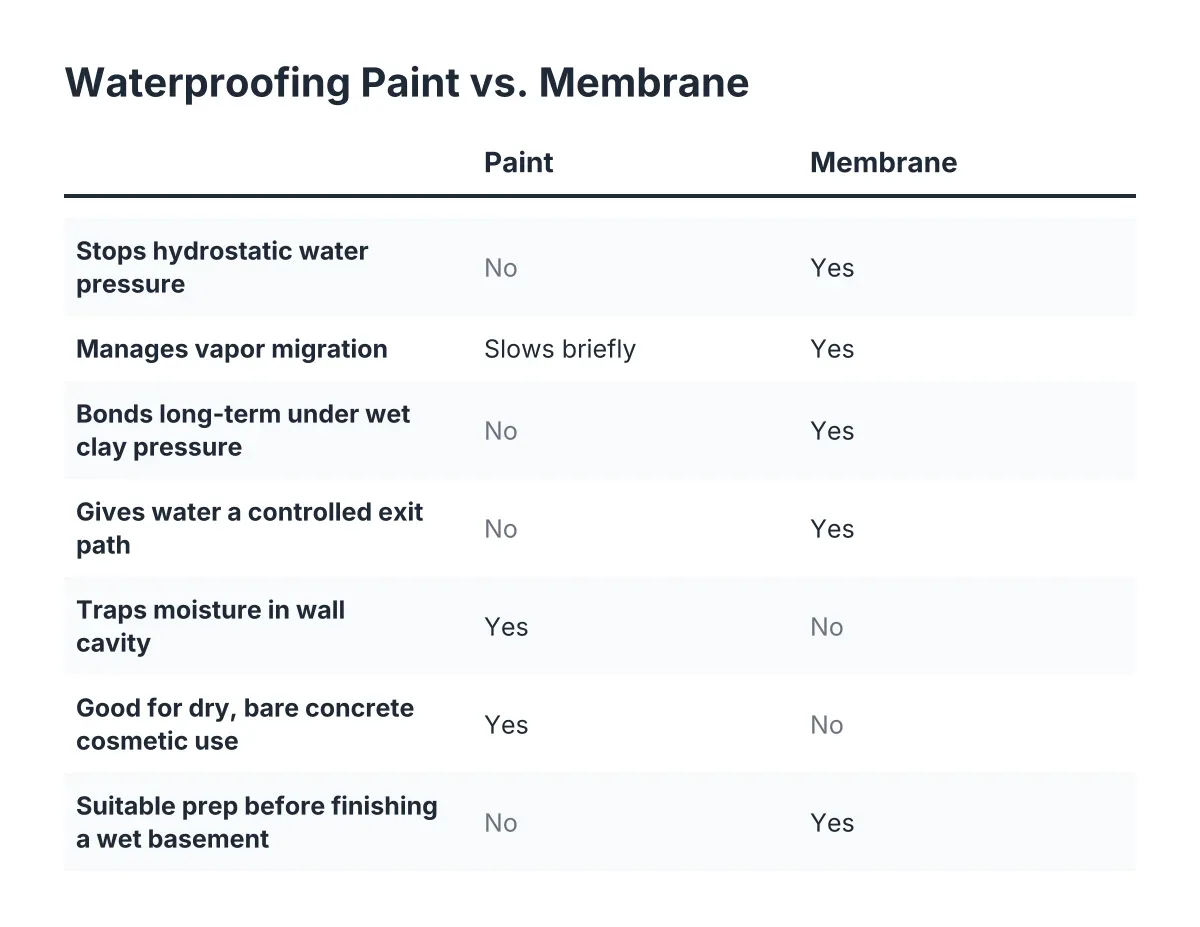
A waterproofing membrane is a thick rubberized or plastic barrier applied to foundation walls to physically block water. Exterior membranes go on the outside of the foundation, which means excavation; interior versions channel water down to a drain instead of blocking it. Membranes cost more than coatings but address water under pressure, which paint cannot. Our comparison of waterproofing paint versus membrane walks through when each one makes sense.
Waterproofing Paint (Sealer)
Waterproofing paint is a coating brushed or rolled onto interior basement walls to slow moisture coming through the concrete. It can help with minor dampness and vapor, but it does not stop water pushed through by hydrostatic pressure, and it can peel when pressure builds behind it. It matters because it is the cheapest item on the menu and the one most often oversold. Treat it as a finishing touch, not a cure.
Vapor Barrier
A vapor barrier is a sheet of plastic or similar material that blocks water vapor from passing into your walls or under your flooring. In a basement finishing project, it typically goes against the foundation wall or under the subfloor before framing and flooring are installed. It matters because trapped moisture behind drywall grows mold you cannot see. If you are comparing bids to finish your basement, ask each contractor where their vapor barrier goes and why.
Around the House
Some of the best moisture control for your basement happens outside the basement entirely. These terms cover the simple, exterior-side items an honest contractor checks first.
Grading
Grading is the slope of the ground around your foundation. Soil should slope away from the house so rainwater and snowmelt run off instead of pooling against the basement walls. Bad grading is one of the most common causes of wet basements and one of the cheapest to correct. A contractor who walks the outside of your house before quoting interior work is giving you a straight answer, not a bigger invoice.
Downspout Extension
A downspout extension is a pipe or trough that carries roof water from the bottom of your gutters several feet away from the foundation. Without one, every rainstorm dumps water right at the basement wall. It is a small, inexpensive item that can shrink the moisture problem a bigger system has to handle. Ask about downspouts before you sign off on anything that involves breaking concrete.
Paperwork and Process
Moisture Test
A moisture test is a check of how much water vapor is coming up through your concrete slab, often done by taping plastic to the floor or using a meter. It matters because flooring installed over a damp slab can buckle, delaminate, or grow mold underneath. Any contractor planning basement flooring should be able to tell you how they test the slab first. Skipping this step is how new floors fail in year one.
Scope of Work
A scope of work is the written section of a quote that spells out exactly what the contractor will do, what materials they will use, and what is excluded. It is the single most useful page in any bid, because two quotes with the same bottom line can cover different amounts of work. Read it line by line and ask about anything vague. Our guide to choosing basement moisture control in Minneapolis covers what a solid scope looks like.
Free Estimate
A free estimate is a no-cost visit and written price for your project, with no obligation to hire. For basement work, a useful estimate includes a look at moisture conditions, not just a square-footage price for finishing. As a local Minneapolis basement finishing contractor, we give free estimates and straight answers on layout, flooring, and permits before any work begins. If an estimate skips the moisture conversation entirely, get another one.
Using These Terms
What this basement moisture control glossary gives you is the ability to read a quote without guessing. You can now tell a drainage fix from a coating, ask where the water actually goes, and notice when a bid skips the moisture question before promising a finished basement. When you are ready, bring these questions to a free estimate and see who answers them straight.
If you need basement finishing, Minneapolis Basement Finishing Pros can help.
Related guide: basement moisture control — Complete Guide
Prefer to talk it through? Call (651) 758-8806 — a quick call is usually the fastest way to get a straight answer for your situation.