Basement Bathroom Ventilation and Moisture Control: FAQ for Minneapolis Homes
Adding a bathroom below grade raises two problems most homeowners underestimate: where the waste goes and where the steam goes. Basement bathroom exhaust fan systems and ventilation moisture questions come up on nearly every project we discuss, right alongside the ejector pump vs gravity plumbing decision. This FAQ answers both, plainly, so you can evaluate your options before anyone opens a wall.
Why does basement bathroom ventilation and moisture matter so much?
Basement bathroom ventilation matters because a basement is the coolest, dampest part of a Minneapolis house, and a shower adds a heavy load of humid air with nowhere natural to go. Without a proper exhaust fan vented outside, that moisture condenses on cold walls and joists. Over time you get mold, musty smells, and ruined finishes.
Upstairs bathrooms get some help from windows and warmer surrounding air. A basement bathroom gets neither. That is why ventilation is not an add-on to a basement bathroom remodel; it is part of the core design, planned at the same time as the plumbing rough-in.
Do I need an exhaust fan in a basement bathroom?
Yes. Any basement bathroom with a shower or tub needs an exhaust fan that vents to the outdoors, and Minneapolis inspectors will look for it. A fan that dumps air into a joist bay or the attic-style cavity above a drop ceiling just moves the moisture problem somewhere you cannot see it.
For a half bath with only a toilet and sink, the moisture load is lighter, but a fan is still the right call. It handles odors and keeps the small room from feeling stale. Given how little a fan adds to the total bathroom remodeling cost, skipping it is a false saving.
What is the right way to vent a basement bathroom exhaust fan?
The right way to vent a basement bathroom exhaust fan is a short, direct duct run through the rim joist to an exterior wall cap, using smooth rigid duct where possible. Long, sagging flex duct runs are the number one cause of weak airflow and condensation drips inside the duct.
In a cold climate like ours, the duct should be insulated wherever it passes through unconditioned space. Warm, wet shower air hitting a cold duct in January condenses fast, and that water runs back down and drips out of the fan. Most of the "why does my basement bathroom exhaust fan drip" complaints trace back to uninsulated duct, a run that is too long, or a missing backdraft damper.
How do I control basement bathroom moisture beyond the fan?
Controlling basement bathroom ventilation and moisture takes more than one fan. The fan removes shower steam, but the room itself needs to be built for a below-grade environment. Materials and details matter as much as airflow.
A moisture-smart basement bathroom in Minneapolis usually includes:
- A properly sized exhaust fan, ideally with a humidity sensor or timer so it runs 15 to 20 minutes after each shower
- Cement board or a waterproof membrane behind tile, never bare drywall in the wet zone
- Mold-resistant drywall and paint on the remaining walls
- Basement flooring rated for moisture, such as luxury vinyl plank or tile, not solid hardwood or glued carpet
- A door undercut or transfer grille so makeup air can reach the fan
- A dehumidifier for the wider finished basement in humid summer months
However, none of this fixes an existing water problem. If your basement takes on water in spring, address waterproofing and drainage first. A bathroom built over an active moisture problem fails no matter how good the fan is.
Ejector pump or gravity drain: which plumbing option fits my basement?
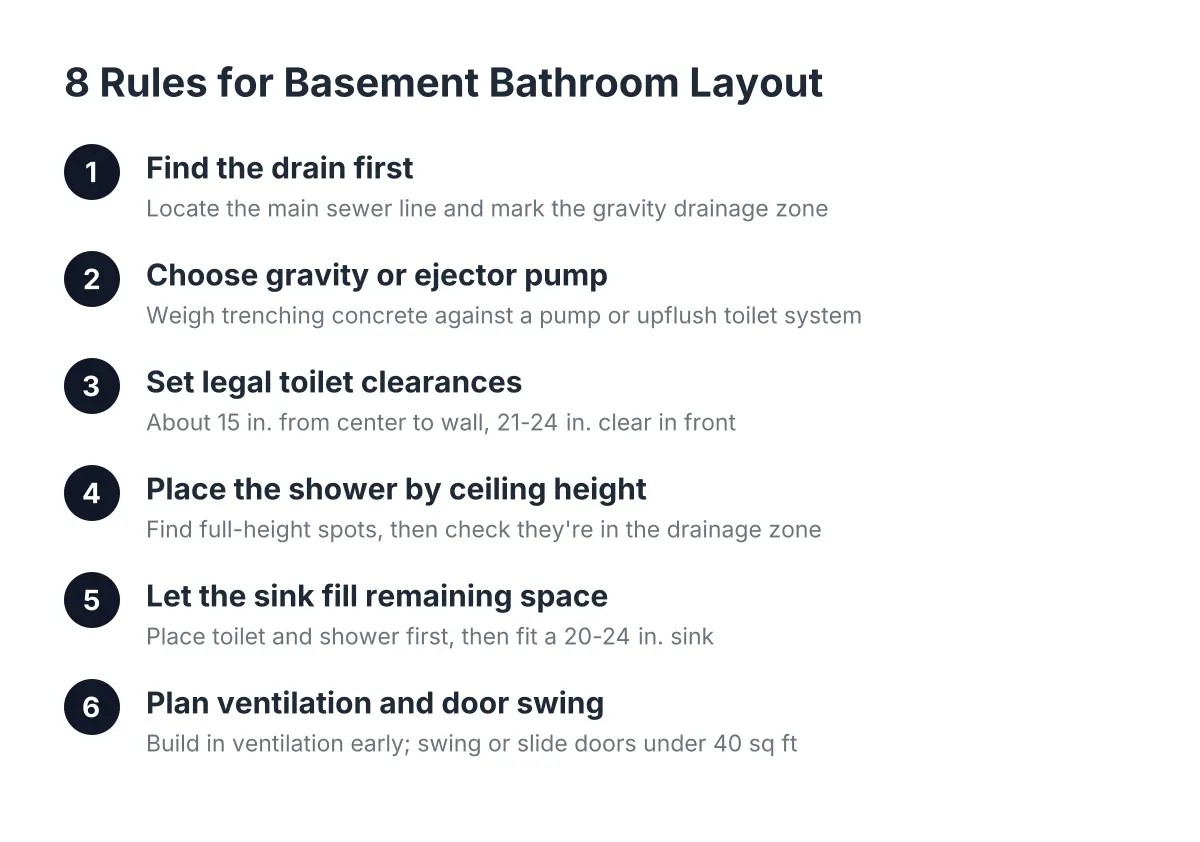
Gravity drainage is the better option when your home's main sewer line exits below the basement floor, because waste flows out with no pump, no noise, and nothing mechanical to fail. An ejector pump is the answer when the sewer line sits higher than the new bathroom fixtures, which is common in Minneapolis homes.
Here is how the three main basement bathroom plumbing options compare:
- Gravity drain. Cheapest to operate and most reliable, but only possible if the sewer exit point is deep enough. Concrete still gets cut to run new drain lines.
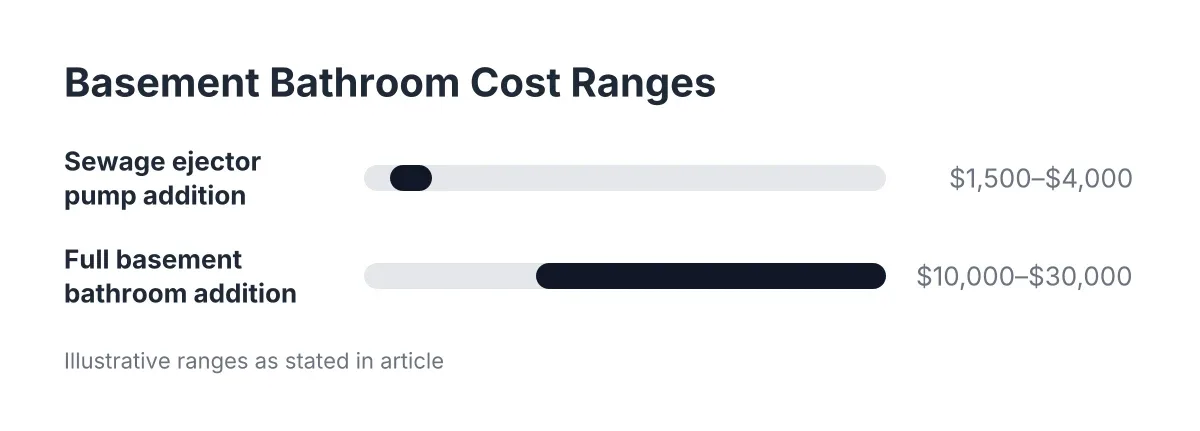
- Sewage ejector pump. A sealed pit and pump lift waste up to the main line. It adds an illustrative $1,500 to $4,000 to the project, needs power, and hums briefly when it runs, but it supports a full bathroom with a standard toilet and shower.
- Upflush toilet system. A macerating unit behind the toilet grinds waste and pumps it up through small pipes. It avoids most concrete cutting, which lowers cost and mess, but the units are louder, fixture choices are limited, and long-term maintenance is higher.
For a family planning to use the bathroom daily for years, an ejector pump or gravity setup is usually worth the upfront cost over an upflush system. A plumber should verify your sewer depth on site before you commit; guessing wrong here is expensive.
What does a basement bathroom rough-in involve?
A basement bathroom rough-in means the drain lines, vent pipes, and water supply stubs are installed under and through the slab before walls and finishes go in. If your builder roughed in a bathroom when the house was built, you will see capped pipes sticking out of the concrete, and your project cost drops because the concrete cutting is already done.
No rough-in means the crew saw-cuts the slab, trenches for drain lines, sets the ejector pit if needed, and pours new concrete. Plumbing vents must also tie into the home's vent stack; this is a code item, not an option, and it is one reason permits and inspections protect you rather than slow you down.
How much does adding a bathroom to a basement cost?
Adding a bathroom to a basement typically lands between $10,000 and $30,000 as an illustrative range, depending on whether you have an existing rough-in, whether you need an ejector pump, and your finish level. Concrete cutting and pump systems push the number up; an existing rough-in and modest finishes pull it down.
For context on the wider project, an average basement remodel runs $30 to $75 per square foot according to Angi. The bathroom is the most expensive room per square foot in that budget. Homeowners also gave basement finishing a joy score of 9.5 out of 10 in the NAR Remodeling Impact Report, according to the National Association of Realtors, which says something about how these projects feel to live with.
What layout and design choices work for a small basement bathroom?
Small bathroom ideas that work well below grade include a 5 by 8 foot three-quarter bath with a walk-in shower instead of a tub, a pocket door to save swing space, and placing the bathroom near existing plumbing stacks to shorten drain runs. Bright lighting and light tile matter more in a basement, where there is little or no natural light.
Suppose a family of five in Minneapolis is finishing a basement with a bedroom and family room so the older kids can spread out. In that scenario, placing a compact three-quarter bath against the wall shared with the ejector pit and the laundry drain keeps plumbing runs short, trims concrete cutting, and leaves more of the budget for the living space. That kind of layout decision, made on paper before demolition, is where most of the savings in basement bathroom remodeling actually come from.
Can good ventilation fix a musty basement bathroom I already have?
A better fan and duct setup often fixes a musty basement bathroom, provided the moisture source is shower steam and not groundwater. Start by checking that the existing fan vents outside, moves enough air, and runs long enough after each shower. Then look at duct insulation and length.
If mustiness persists with a good fan running, the moisture is coming from somewhere else, such as the slab, the foundation walls, or a plumbing leak. At that point, bring in a professional to diagnose it before you spend on finishes. Sorting out basement bathroom ventilation and moisture problems in the right order saves you from paying for the same repair twice.
If you need basement finishing, Minneapolis Basement Finishing Pros can help.
Prefer to talk it through? Call (651) 758-8806 — a quick call is usually the fastest way to get a straight answer for your situation.