Basement Contractor Warranty Guarantees: 8 Things That Should Be Covered in Minneapolis, MN
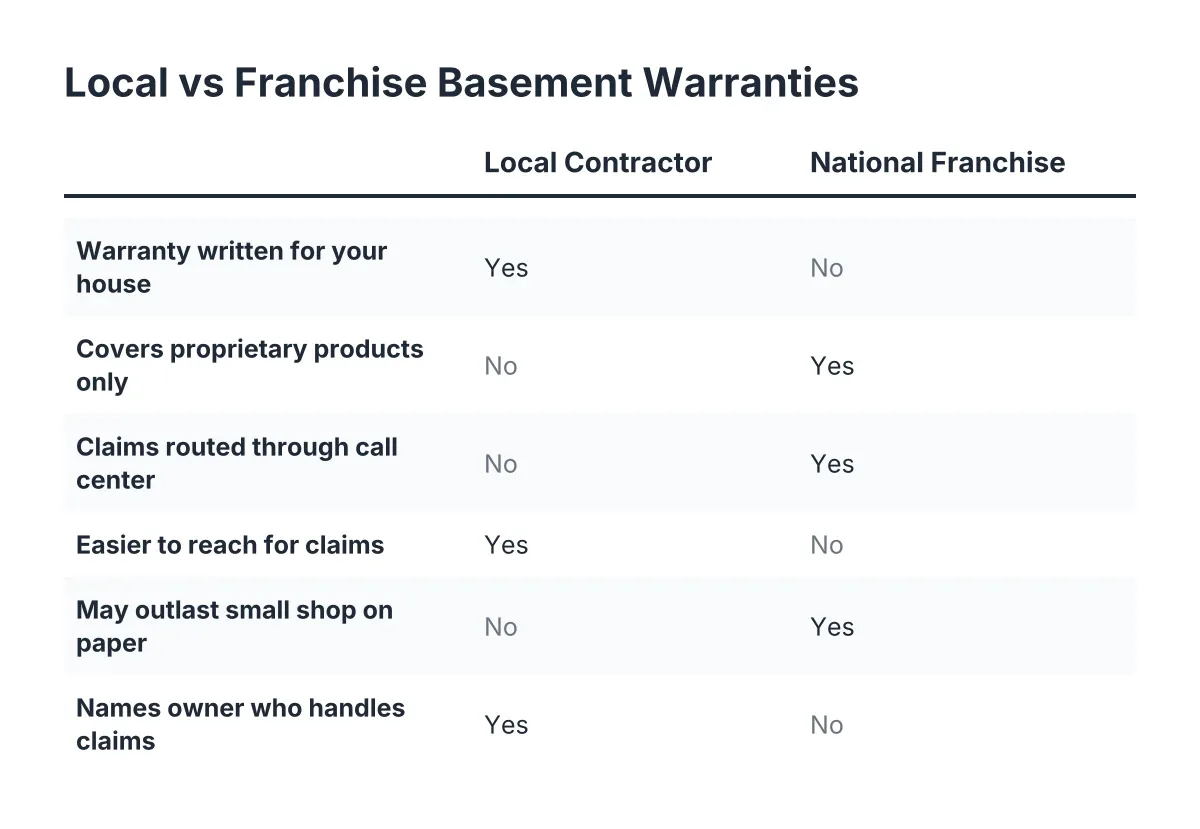
If you are about to sign a contract for a basement finish, the warranty page deserves as much attention as the price. Basement contractor warranty guarantees vary more than most homeowners expect, especially when you compare a local basement remodel contractor in Minneapolis, MN with a national franchise. A basement warranty coverage checklist will help you compare protection levels across quotes. Franchise networks often sell a standardized warranty written at a corporate office, routed through a call center, and limited to the exact products in their system. A local operator writes a warranty for the house in front of them. This list walks through eight things the warranty on your basement project should actually cover, so you can compare quotes on something other than the bottom-line number.
One note before the list. This matters double if you are finishing the basement to add a legal bedroom. If the project fails inspection or leaks a year later, a weak warranty leaves you holding the repair bill on a room you cannot legally rent or list.
1. Workmanship Coverage in Writing, With a Clear Term
The core of any basement finishing warranty is workmanship: framing, drywall, trim, flooring installation, and tile work. The warranty should state in writing how long that coverage lasts and what happens when something fails, such as a drywall seam cracking or a floor transition lifting. Common terms run one to five years in residential remodeling; what matters most is that the term, the covered work, and the repair process are all spelled out on paper, not promised over the phone.
A vague line like "we stand behind our work" is not a warranty. Ask the contractor to point to the exact paragraph that says who fixes a failed item, at whose cost, and within what timeframe.
2. Separation of Workmanship and Manufacturer Coverage
Materials and labor fail in different ways, and a good contract treats them separately. Your flooring, windows, water heater, and fixtures carry manufacturer warranties; the contractor's warranty covers how those products were installed. Strong basement contractor warranty guarantees name both layers and explain who handles a claim in each case, so you are not bounced between the installer and the manufacturer.
For example, suppose a luxury vinyl plank floor starts cupping two winters after install. If the plank itself is defective, that is a manufacturer claim. If the floor was installed over a damp slab with no moisture testing, that is an installation problem, and the contractor's warranty should cover the fix. The contract should make that line clear before anyone starts work.
3. Moisture and Water Intrusion: Your Basement Warranty Coverage Checklist
Minneapolis basements deal with real moisture pressure: spring snowmelt, clay soils, and long freeze-thaw cycles. No honest contractor can promise your basement will never see water; what the warranty can and should cover is the moisture work they performed. That includes vapor barriers, subfloor systems, drainage details they installed, and the judgment calls they made about slab condition before flooring went down.
According to W. R. Meadows, a vapor barrier placed under a concrete slab is meant to block moisture moving from the ground into the concrete above. A careful contractor checks for that barrier and for damp spots before choosing a floor assembly. Even when a vapor barrier exists under the slab, a subfloor system can still protect the finished space from a future moisture event. Ask how the warranty treats moisture damage: does it cover failures in work they did, and does it exclude groundwater events entirely? Both answers can be fair; hidden answers are not.
4. Pass-the-Inspection Language, Not Just Pass-the-Walkthrough
If an inspector or realtor told you your basement bedroom is not legal, this is the item to press on. The contract should state that all work will be permitted, built to the current Minneapolis code, and corrected at the contractor's expense if it fails a city inspection. That is different from a warranty that only covers defects you find after move-in.
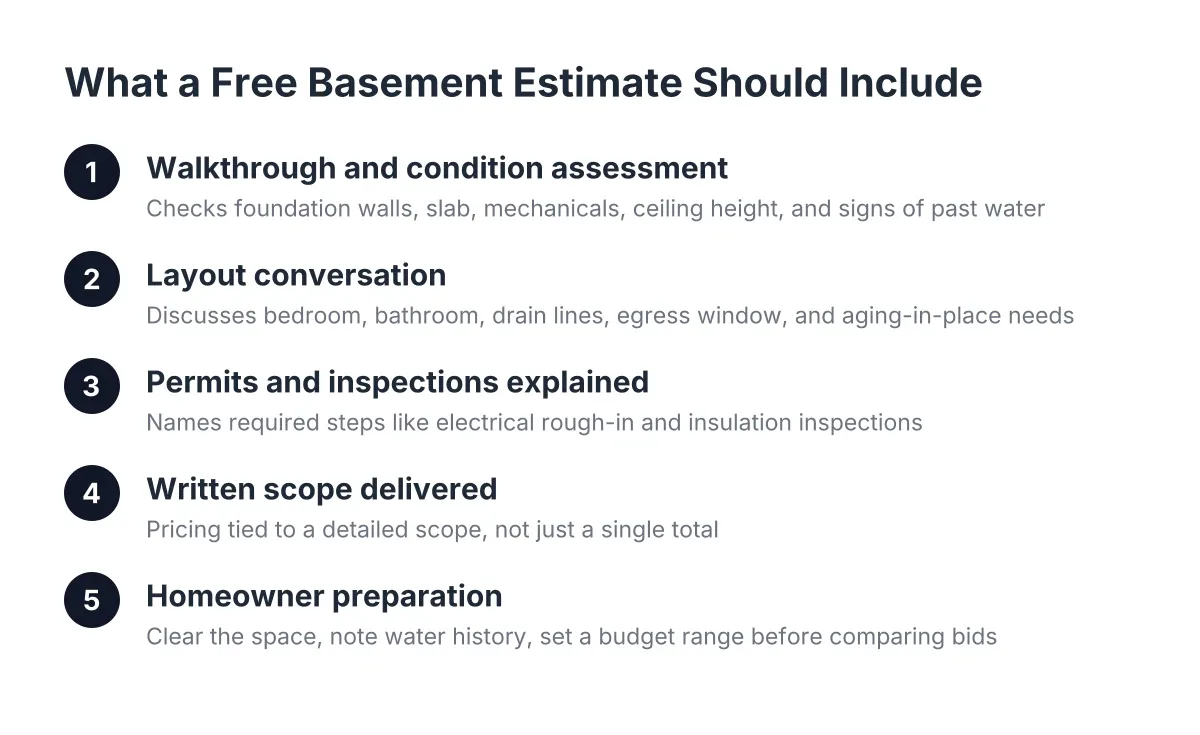
Basement finishing projects typically involve multiple inspections along the way, including an electrical rough-in inspection and a later insulation inspection, before drywall closes everything up. A contractor who pulls permits and schedules those inspections is putting their work in front of the city on your behalf. A contractor who suggests skipping permits is shifting all of that risk onto you, and no warranty language can fix an unpermitted bedroom when you go to sell in 2026 or any year after.
5. Coverage That Survives the Company, Not Just the Salesperson
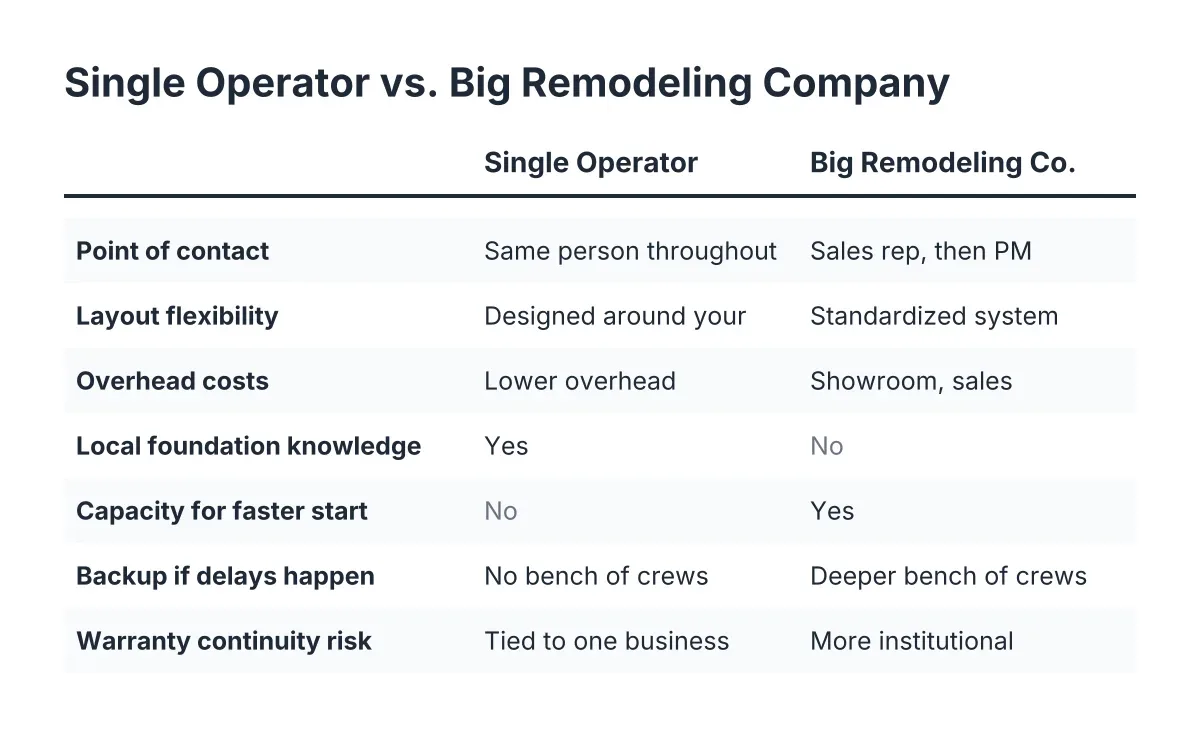
Here is where the local-versus-franchise question gets practical. A franchise warranty often covers only the franchise's proprietary wall panels or flooring products, and claims route through a national office that has never seen your house. If the local franchisee changes hands, homeowners sometimes learn their coverage was tied to products, not to the finished basement as a whole.
With a local basement remodeling company, ask the plain version of the question: who answers the phone on a warranty claim in year three, and what happens if the company closes? Honest answers include naming the owner who handles claims and explaining which product warranties transfer to you directly. There is a real trade-off here; a national network may outlast a small shop on paper, while a local operator is far easier to actually reach. Weigh both, but get the claims process in writing either way.
6. Transferability When You Sell or Rent the Property
For a small landlord or anyone finishing a basement before a sale, transferability is worth money. A warranty that transfers to the next owner becomes a selling point and a line item in your disclosure packet. A warranty that dies at closing is only worth what it covers while you hold the property.
This matters for the numbers, too. According to the National Association of Realtors, homeowners recover about 64% of basement finishing costs at sale, one of the higher recovery rates among 20 common projects studied. However, returns swing widely by market; Zonda and the Journal of Light Construction report resale recoup ranging from 23% to 86% depending on the area. A documented, transferable warranty and a permit history are two of the few things you control that push your basement toward the high end of that range.
7. Clear Exclusions, Stated Up Front
Every warranty excludes something, and the honest ones say so plainly. Watch for these common exclusions and decide whether each one is reasonable for your project:
- Groundwater or flooding events the contractor did not cause
- Normal settling cracks in drywall or concrete under a stated size
- Damage from homeowner modifications after the job closes
- Work performed by other trades the contractor did not hire
- Humidity damage when the homeowner does not run a dehumidifier
That last point about third-party work cuts both ways. Some warranties void entirely if anyone else touches the space, which can trap a landlord who needs a plumber for an unrelated repair in year two. Ask for exclusion language that voids coverage only on the specific work that was altered, not the whole basement.
8. Warranty and Price: A Realistic Match
A long warranty on a lowball quote is a red flag, not a bonus. According to Angi, an average basement remodel runs $30 to $75 per square foot, with high-end projects passing $120. If one bid comes in far below that range and carries a "lifetime guarantee," the math usually works out to a company that plans to deny claims, not honor them. When you are hiring a basement contractor, the basement warranty coverage checklist should weigh both the written terms and the price together; a fair quote with modest, specific coverage beats a cheap quote with sweeping promises.
Say a Minneapolis homeowner gets three bids to finish a 700-square-foot basement with a bedroom and a basement bathroom. In that scenario, bids of roughly $35,000 and $42,000 with written two-year workmanship coverage are worth comparing line by line. A $19,000 bid with a lifetime warranty and no permit plan is the one to walk away from, however tempting the number looks.
How to Compare Basement Contractor Warranty Guarantees Across Quotes
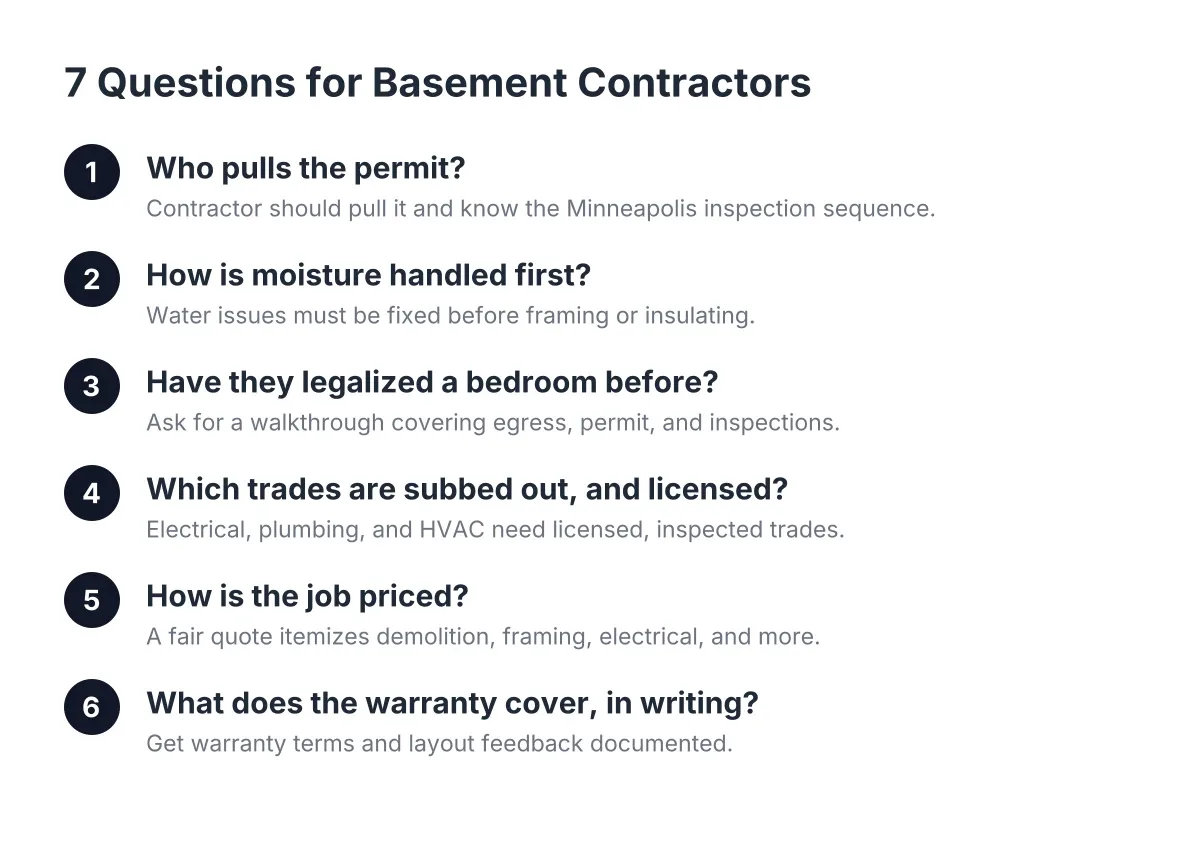
The fastest way to compare warranty guarantees from basement contractors is to put every quote through the same five written questions. Ask for the workmanship term, the moisture coverage, the inspection-failure remedy, the transferability terms, and the full exclusion list. Any basement remodeling company near me search will surface firms happy to answer; the ones who dodge in writing will dodge on a claim.
Work through it in this order:
- Get each warranty as a document, not a verbal summary.
- Confirm permits and city inspections are the contractor's responsibility.
- Match the workmanship term across bids so you compare like with like.
- Read the exclusions out loud; anything confusing, ask them to rewrite.
- Ask who handles a claim in year three, by name.
Local basement remodelers near me searches will also turn up franchise locations dressed as local shops, so check whether the warranty document names a national network or the company signing your contract.
The Bottom Line for Minneapolis Homeowners
A basement warranty is only as good as the company's willingness to show up and the paper it is written on. For homeowners in Minneapolis, MN, the strongest signal is a contractor who volunteers the warranty terms, pulls the permits, and explains the moisture plan before asking for a signature. The joy payoff is real; the National Association of Realtors reports a 9.5 out of 10 joy score for finished basements. Protecting that outcome starts with reading the warranty before the work, not after the first crack appears.
One last caution: warranty language, permit requirements, and code details change, and every foundation is different. Before cutting into a slab or a foundation wall, have a licensed and insured professional assess the specific conditions in your basement rather than relying on a general guide.
If you need basement finishing, Minneapolis Basement Finishing Pros can help.
Prefer to talk it through? Call (651) 758-8806 — a quick call is usually the fastest way to get a straight answer for your situation.