Basement Flooring Terms Explained: A Plain-English Glossary
If you are pricing out a basement project in Minneapolis, the quotes and product pages throw a lot of jargon at you fast. This basement flooring glossary breaks down the terms you will actually meet, in plain English, so you can read a bid line by line and know what you are paying for. Use it to understand what a contractor is proposing, ask sharper questions, and spot the difference between a real solution and a shortcut. No sales pitch, just the words explained.
- Slab: the concrete floor you start with
- Subfloor: the layer between concrete and finished floor
- Vapor barrier: plastic sheet that blocks ground moisture
- Moisture testing: checking how damp your slab is
- Efflorescence: white powder that signals moisture
- Hydrostatic pressure: groundwater pushing up on the slab
- Self-leveling underlayment: pourable mix that flattens a wavy slab
- Floating floor: flooring that isn't glued or nailed down
- Luxury vinyl plank (LVP): waterproof plank flooring
- Epoxy coating: hard finish painted onto concrete
- Polished concrete: the slab itself, ground smooth and sealed
- Engineered wood: real wood top over a stable base
- Carpet tile: carpet in replaceable squares
- Dimple mat: bumpy plastic underlayment with an air gap
- Freeze-thaw cycle: winter movement that cracks floors
- Scope of work: the written list of what the job includes
- Change order: written approval for mid-job changes
- Free estimate: a no-cost, no-obligation quote
What You Are Standing On: Concrete, Moisture, and Basement Flooring Glossary Terms
Most basement flooring problems start below the finished floor, so this basement flooring glossary starts there too. These are the terms that explain why a Minneapolis basement floor needs more thought than a floor upstairs.
Slab
A slab is the poured concrete floor at the bottom of your basement. It sits directly on the ground, which means it stays cool and can pass moisture up from the soil year-round. Any flooring you install goes on top of it, so its condition sets the rules for the whole project. A contractor who inspects your slab for cracks, dampness, and unevenness before quoting is doing the job right.
Subfloor
A subfloor is a layer installed between the concrete slab and your finished flooring. In basements, it usually adds warmth, a flatter surface, and a moisture break under the floor you walk on. Skipping it can make a basement floor feel cold and can trap dampness under certain materials. If a quote includes a subfloor, expect a higher price but a warmer, longer-lasting floor.
Vapor Barrier
A vapor barrier is a sheet of plastic or a similar layer that blocks moisture from moving out of the concrete and into your flooring. Concrete looks dry but constantly wicks water vapor up from the ground below. Without a barrier, that vapor can warp wood, grow mold under carpet, and pop up flooring seams. When a bid lists a vapor barrier, the contractor is planning for how basements actually behave.
Moisture Testing
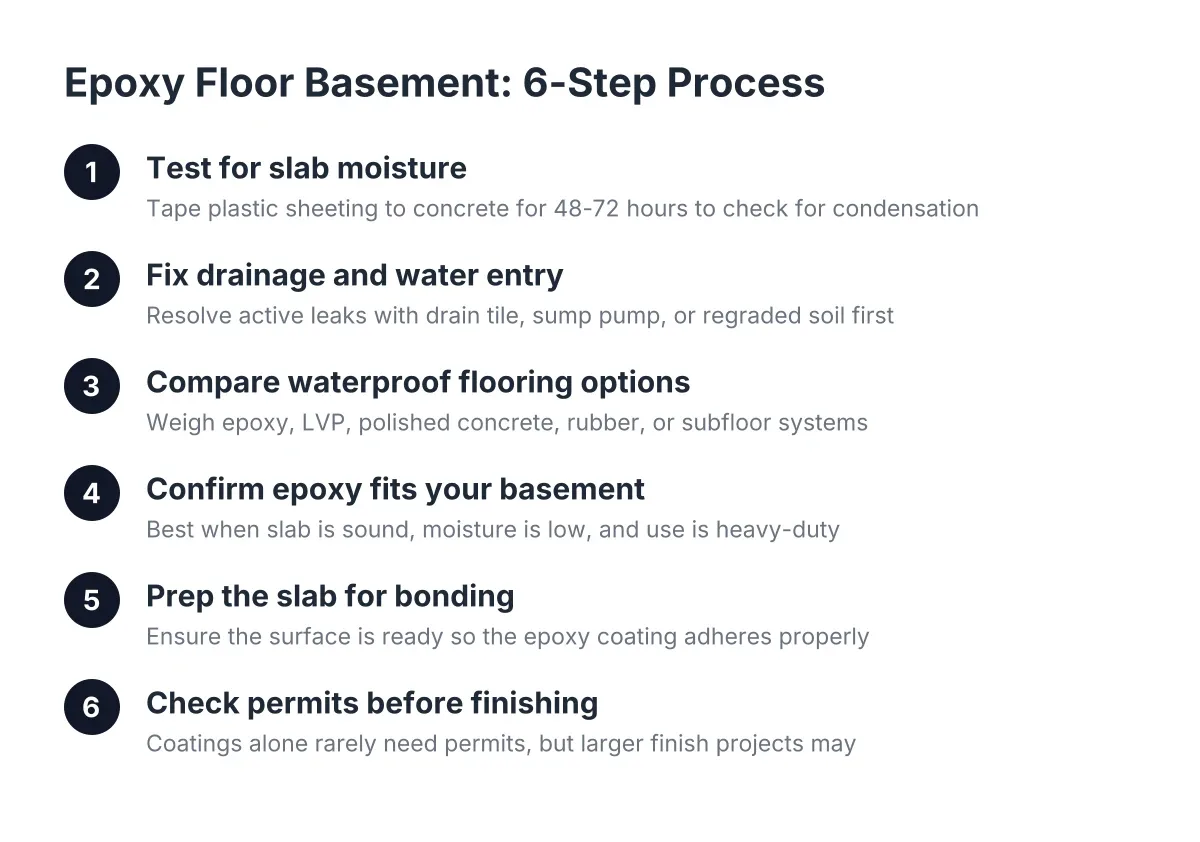
Moisture testing means measuring how much water vapor is coming through your concrete slab before choosing a floor. A common simple version is taping a plastic square to the slab for a day or two and checking for condensation underneath. The results tell you which flooring materials are safe and which will fail. Ask any contractor how they will check moisture; a shrug is a warning sign.
Efflorescence
Efflorescence is the white, chalky powder that shows up on concrete when water moves through it and leaves minerals behind. It is not mold, but it is proof that moisture is passing through your slab or walls. If you see it, deal with the water source before installing any finished floor. A good contractor will point it out during a walkthrough instead of covering it up.
Hydrostatic Pressure
Hydrostatic pressure is the force of groundwater pushing against your basement slab and walls from outside. In wet springs, it can push water up through cracks and joints in the concrete. No flooring product can beat it; drainage and waterproofing have to handle it first. If a contractor mentions it, they are telling you the water problem comes before the flooring decision, which is the honest order of operations.
Freeze-Thaw Cycle
A freeze-thaw cycle is the repeated freezing and thawing of water in and around concrete, which makes the material expand, contract, and crack over time. Minneapolis winters put basements through this every year, and it is a big reason floors that work fine in milder climates fail here. Flooring that can flex or float handles this movement better than rigid materials glued tight to the slab. For local picks that hold up, see these basement flooring ideas that survive Minneapolis moisture and freeze-thaw.
Flooring Types, Installation, and Basement Flooring Glossary Entries
These are the words you will see on product pages and quote line items once the slab is ready.
Self-Leveling Underlayment
Self-leveling underlayment is a pourable cement-based mix that spreads out and hardens into a flat surface over an uneven slab. Older basement slabs often have dips and humps that make plank flooring click apart or tile crack. Leveling fixes that before installation instead of after failure. If your slab is wavy and the quote does not mention leveling, ask why.
Floating Floor
A floating floor is flooring that locks together at the edges and rests on the slab without glue or nails. Because nothing is fastened down, the floor can expand and shrink with temperature and humidity swings without buckling. That flexibility makes floating floors a common choice for basement flooring in cold climates. It also makes future repairs easier, since damaged sections can come apart and go back together.
Luxury Vinyl Plank (LVP)
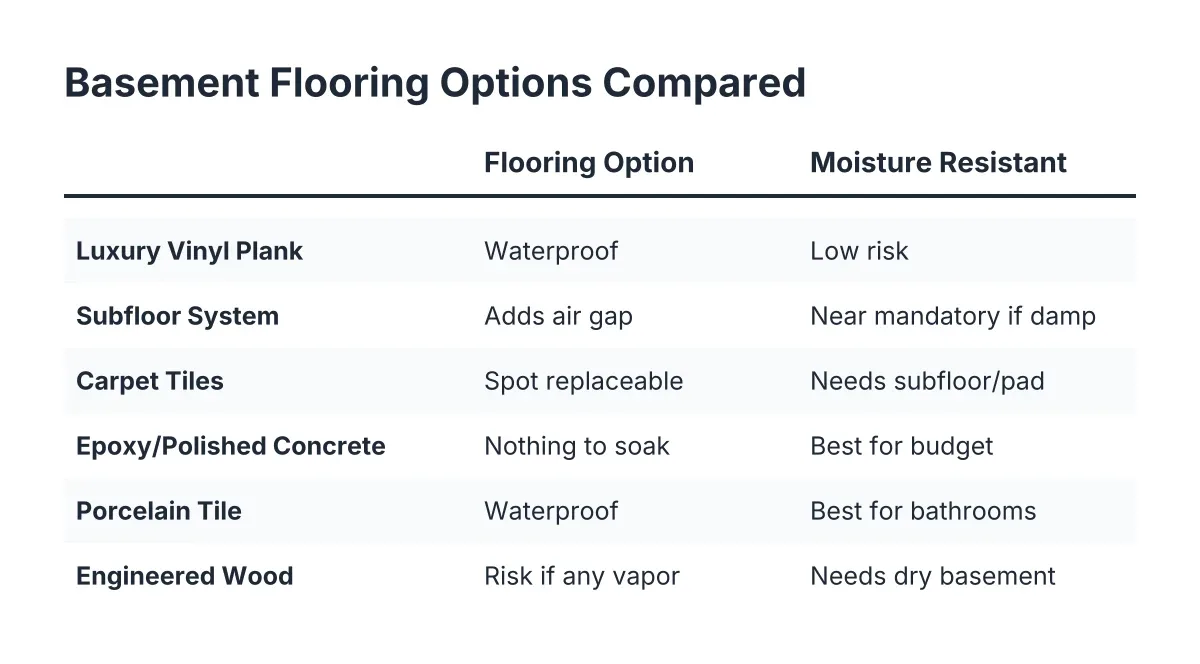
Luxury vinyl plank, or LVP, is a waterproof plastic-core flooring made to look like wood boards. It handles basement moisture far better than real wood, feels warmer than bare concrete, and usually installs as a floating floor. It is one of the most common recommendations for finished basements for exactly those reasons. Quality varies by thickness and wear layer, so ask what grade the quote includes.
Epoxy Coating
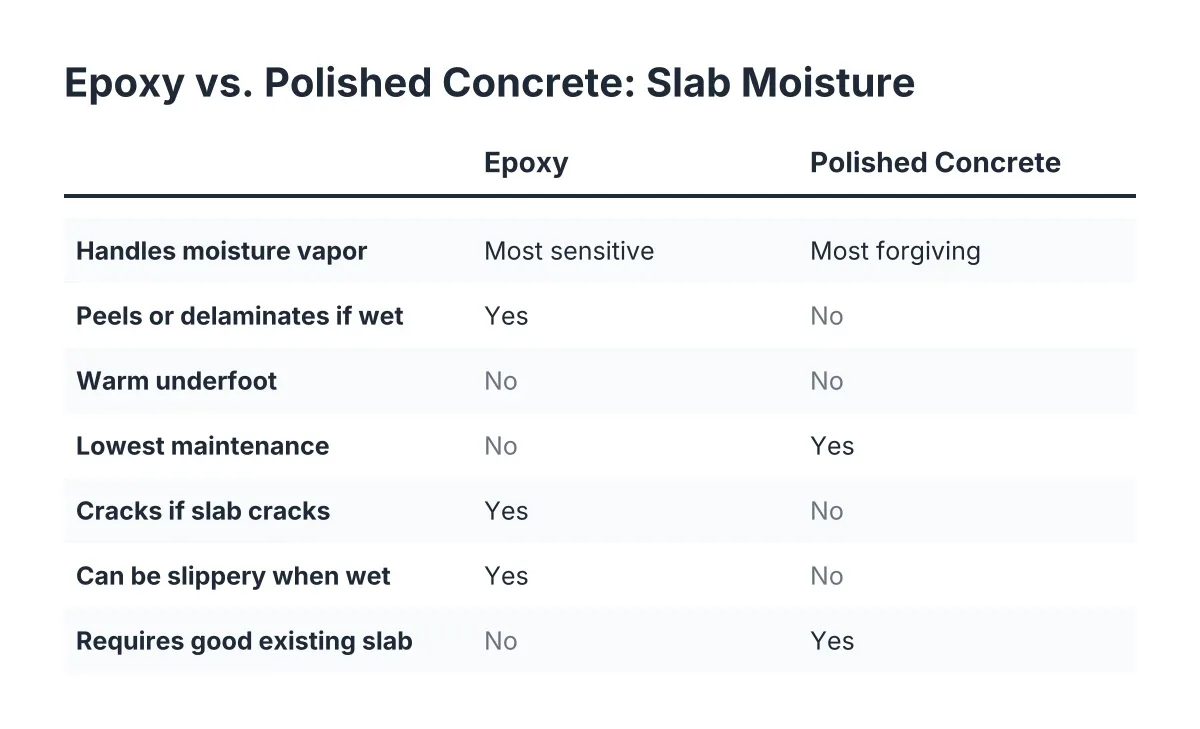
An epoxy coating is a hard resin finish applied directly to the concrete slab, like a thick, durable paint. It resists water, stains, and scuffs, which makes it popular for workshops, laundry areas, and rec rooms. It will not hide slab flaws, and it stays as cool as the concrete under it. This comparison of epoxy, polished concrete, and tile for Minneapolis basements walks through where each one makes sense.
Polished Concrete
Polished concrete means grinding the existing slab smooth and sealing it so the concrete itself becomes the finished floor. There is nothing on top to warp or peel, which makes it one of the most moisture-proof choices available. The trade-offs are a hard, cool surface and a look that is more modern than cozy. Rugs fix the comfort issue in living areas.
Engineered Wood
Engineered wood is flooring with a thin layer of real wood glued over a stable plywood-style base. The layered build resists the swelling and shrinking that ruins solid hardwood in basements. It still needs a dry slab, a vapor barrier, and often a subfloor to be safe below grade. If you want real wood downstairs, this is the version to ask about.
Carpet Tile
Carpet tile is carpet cut into squares that install piece by piece instead of as one big roll. If a section gets wet or stained, you pull and replace just those squares rather than the whole floor. That makes it a practical pick for basements where a one-time water event is always possible. Look for tiles with a moisture-resistant backing.
Dimple Mat
A dimple mat is a rigid plastic underlayment covered in small raised bumps that create an air gap between the slab and your flooring. That gap lets the concrete breathe and gives minor moisture a place to dry out instead of soaking into the floor above. Many basement subfloor panels build this dimpled layer in. It is a small line item that prevents big headaches.
Quotes, Paperwork, and Planning Terms
The last set of terms shows up on the paperwork, not the floor.
Scope of Work
A scope of work is the written list in your contract that spells out exactly what the contractor will and will not do. For flooring, it should name the material, the prep steps like moisture testing and leveling, and who handles cleanup. Vague scopes are where surprise charges live. Compare bids by scope, not just by the bottom-line number, and measure your space first with this concrete slab calculator guide so quotes line up with real square footage.
Change Order
A change order is a written agreement that documents any change to the job after the contract is signed, along with its cost. Basements hide surprises, like a cracked slab under old carpet, so changes happen. A contractor who insists on written change orders is protecting you as much as themselves. Verbal "we'll work it out" promises are how budgets blow up.
Free Estimate
A free estimate is a no-cost visit and written quote for your project, with no obligation to hire. It should include a look at your slab, a conversation about moisture, and a scope you can compare against other bids. In Minneapolis, any serious basement contractor should walk the space before naming a number. Collecting two or three free estimates is the fastest way to learn what a fair price looks like for your basement.
Using These Terms
You now know what the words on a flooring quote actually mean, from vapor barrier to change order. That is what this basement flooring glossary is for: read each line item, ask why it is or is not there, and judge whether the contractor is planning for your slab or just selling a product. When you are ready to compare real numbers for your own basement, start with a written scope and a free estimate.
If you need basement finishing, Minneapolis Basement Finishing Pros can help.
Prefer to talk it through? Call (651) 758-8806 — a quick call is usually the fastest way to get a straight answer for your situation.